As usual I found a nice gem for the blues; but this time from the Wu-Tang Clan.
Now if y'all don't know, I was heavy into Wu-Tang when I was a teenager. They practically raised me up; at 17 is when I found the blues and never went back. But I don't forget where I came from.
In 2005 a compilation album called 'Wu-Tang Meets the Indie Culture Vol. 1' which features members of the Wu-Tang Clan and their affiliates was released. In it, is a track called 'Slow Blues', which features Vast Aire, Byata, Wu affiliates Timbo King & Prodigal Sunn rapping over a minor blues progression, produced by Bronze Nazareth. It samples the song 'The Creeper Returns' by blues harpist Little Sonny.
It's a great fusion between these genres, one of the better if not best I've heard. Here it is for your pleasure, and I've also posted the original song it was sampled from:
One of the great things about blues music is that I always discover something to listen to; I've been listening and playing the blues for 17 years and I still am dumbfounded by the sheer amount of music that is available, albeit some harder to come by than others.
This album, appropriately titled 'Old Friends' is one such gem. I've been on a binge listening to the likes of Floyd Jones, Eddie Boyd, and others in the early 50's Chicago blues as of late, and while researching music by Floyd Jones, who doesn't have much on record, I found a little album that was difficult to find on CD (but (but Amazon can print it for you), but easily available on cdbaby for a $9.99 download.
And boy, I could not be happier with the internet.
In 1981, five of the biggest legends in Chicago blues got together in the studio, also in the city, and recorded 17 tracks. Everyone of these artists would get a few songs to lead on vocals; some new material and some old. What is the result? An unabashed, raw, in your face collection of the old-school blues in it's purest form, just that it's 30 years older.
The assembled cast, Kansas City Red, David 'Honey Edwards', Sunnyland Slim, Floyd Jones, and Big Walter Horton, represent a certain legacy in post-war Chicago blues. Many have played with other legends like Muddy Waters, and also became legends of their own. Horton is one of the staples of blues harp, Sunnyland is a pillar of blues piano, Honeyboy Edwards of delta style acoustic guitar, Kansas Red for his drumming, and Jones, while possibly the most obscure of the bunch, had his own unique dark songwriting.
Mashing this band altogether makes for over an hour of honest to truth blues; while many of them nearing their 60's at this point, their singing and playing remains loyal to the formula. While you will not hear anything out of the ordinary, you also shouldn't expect to.
I love the fact that this is all a live recording, as many times the band would go in and out of bars or end off time from one another, but this adds to the improvised flavor of the genre.
If you want to add an album to your whiskey drinking collection, I highly advise you get this one. Not only is it rare, but it's also like a piece of music history.
Track list:
01 - Apron Strings
02 - Gamblin' Man
03 - 43rd Street Jump
04 - The War Is Over
05 - When I Came In
06 - Banty Rooster
07 - Mr. Freddy Blues
08 - Over The Seas Blues
09 - I'm a Prisoner
10 - Freedom Train
11 - Lightnin' Struck the Poor House
12 - Linda Lu -
13 - Lula Mae
14 - That's All Right, I'll Be Around
15 - Heartache
16 - Sometimes I Worry
17 - I'm Going Back Home
This is the only video of the album on Youtube; you can listen to samples of each track in the cdbaby link above:
This song is a rare one; although a cover of the blues-soul/funk, very 80's sounding original from Johnny Taylor (see here), is a true hardcore and raw blues you would expect from me to send out to you.
A stellar fiery performance from legends Luther Allison and James Solberg who features on the track, released in 2002 on a compilation album:
In 1994, a never before released compilation of recordings was brought to light; it was a 1966 session for Testament Records, involving the underrated Floyd Jones and Eddie Boyd, accompanied by some of Chicago blue's finest: Otis Spann on piano, Big Walter Horton on harp, and Fred Below on drums.
The result is some of the most raw and emotional blues recordings ever made... and that needs to be spread out to the world for the sake of history.
Totaling 16 tracks alternating between Floyd and Eddie songs (8 each), this album is a necessary addition to any blues fan. And thanks to Youtube we have the entire album available:
Tracklist:
01. Rising Wind
02. Dark Road
03. Stockyard Blues
04. Sweet Talkin' Woman
05. Train Fare Home
06. Big Town Playboy
07. Peach Tree Blues
08. Bad Boy
09. Hard Times
10. M&O Blues
11. Playhouse Blues
12. Dark Road (alternate)
13. Feel So Bad
14. After Hours
15. Take Your Hand Down
16. Bad Boy (alternate)
Since my recent purchase of my own bluesmobile, a Lincoln Town Car, I decided to discuss a particular and relatively unknown blues song from 1938 called '13 Highway', where it discusses driving a V8 Ford (which is basically what I have) along a lonesome highway. US Route 13 is a real highway in America, that spans five states (North Carolina, Virginia, Maryland, Delaware, & Pennsylvania).
It was originally recorded in 1938 by Walter Davis, which I unfortunately could not find on Youtube (it is available on iTunes though; click on the song for a preview).
It's not a blues standard by any means, since only a handful of bluesmen covered it, the most high profile being Muddy Waters (he recorded it in 1963 but wasn't released until a compilation of unreleased tracks in 1994) and played it live at The Fillmore.
The song's lyrics go like this: I went down 13 Highway, drivin' a brand new V8 Ford I went down 13 Highway, drivin' a brand new V8 Ford Oh you know I was drivin' so fast, baby I couldn't hardly see the road Oh I was drivin' 60 miles an hour, all up and down the hill Oh you know I was drivin' 60 miles an hour, all up and down the hill Oh you know I was speedin' so fast, I couldn't hardly control my wheel Don't the highway look lonesome, after the sun done gone down Oh don't the highway look lonesome, after the sun done gone down Oh you know you're all alone by yourself, there ain't nobody else around
Here are the only versions available online; an Eddie Boyd version exists too but again, it's not available on Youtube:
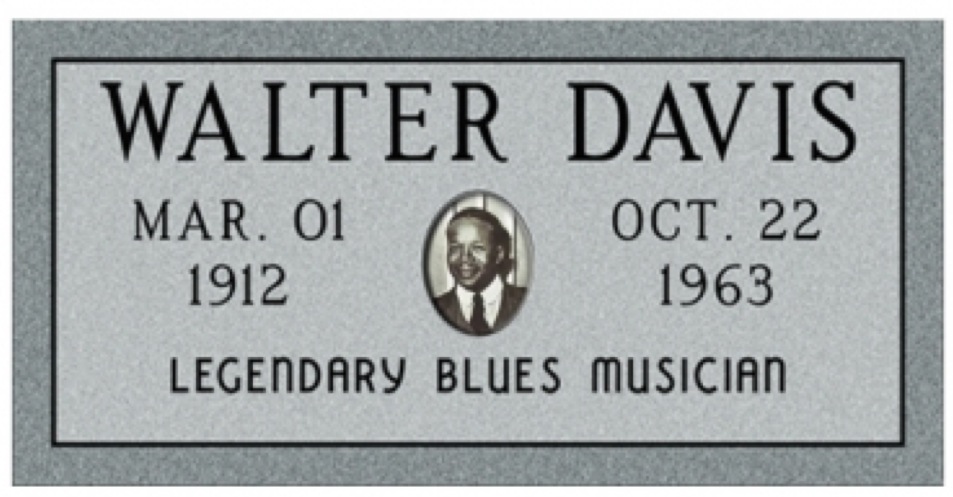
Walter Davis was a bluesman born in Mississippi, and made his way to St. Louis in the 1930's, and recorded many songs (about 150) for the Victor and Bluebird labels, and was a gifted pianist and singer.
His style was very mellow and somber, and while he died in 1963 (and effectively out of the music scene since 1952 because of a stroke) his legacy remains strong. Several songs became standards, and other bluesmen like Muddy Waters and Eddie Boyd covered his songs such as 13 Highway and Come Back Baby.
He was inducted into the Blues Hall of Fame in 2005.
Here are a few of the tracks I was able to find on Youtube; hope you enjoy these down-home blues:
Back in the early days, besides singing about hard times and love, bluesmen also sang about the tragedy of war. Indeed, the big boom was the 'post-war blues' of Chicago, but besides WW2 there was the Vietnam War as well.
I compiled 7 songs about war for you, please enjoy! (the blues, not war)
1- Lightnin' Hopkins - War News Blues
2- J.B. Lenior - Vietnam 3- John Lee Hooker - War is Over 4- Junior Wells - Vietcong Blues 5- Muddy Waters - Herbert Harper's Free Press News 6- Big Joe Williams - Army Man in Vietnam 7- Big Amos Patton - Going to Vietnam Blues
In my usual quest for digging up some old school blues I recently discovered a bluesman who at first I thought was actually Muddy Waters, but turned out to be really Homer Harris.
There's not much information on Homer Harris, except he was born in Drew, Mississippi in 1916, and eventually moved to Chicago.
In 1946 he recorded three tracks for Columbia, and featured Muddy Waters on guitar. My initial confusion was from "I'm Gonna Cut Your Head" as the vocals are too similar to Muddy.
It came back to me that in September 27, 1946 Muddy Waters recorded several tracks for Columbia before moving to Aristocrat (later renamed Chess) and releasing his major hit "I Can't Be Satisfied" in 1947.
Muddy was the guitarist for the 3 tracks Homer Harris would record. Separately Muddy released 'Mean Red Spider' for Columbia under the pseudonym James "Sweet Lucy" Carter.
Homer Harris would not record anything else afterwards, working odd jobs and opening small businesses in Chicago until his death in 2000.
These songs embody the early Chicago blues sound at I enjoy the most, and I hope you enjoy them too.
Gus Jinkins was a blues pianist from Alabama who got some recognition in the early 50's with his intrumental track 'Tricky' got to no. 2 on the R&B charts, but he never got to huge acclaim as an artist.
He recorded songs in the 50's in Chicago under Chess and others, and I found the below song called 'You Told Me' which the type of raw blues I love, released on the Flash label in 1956:
J.O.B. Records was started in 1949 by bluesman Jimmy Oden; and while it only lasted until 1972, it had a lot of great bluesmen under it's arm, including Eddie Boyd (who's song 'Five Long Years' got him and the label fame), Sunnyland Slim, Johnny Shines, Snooky Pryor, and Floyd Jones to name a few.
In 2001, Westside Records released a compilation called 'Rough Treatment: The J.O.B. Records Story' of some of the tracks from the period between 1952-1962, and features some of the rawest, meanest Chicago Blues.
I promise you will NOT be dissapointed. It has 54 (!) tracks on 2 CD's.
Here's one of the tracks, the song used as the title of this compilation, 'Rough Treatment' by Little Hudson:
In 1953, veteran bluesman Eddie Boyd released 'Third Degree', a blues hit written by another legend Willie Dixon. It reached No. 3 on the R&B charts.
The song hits a sweet spot for showing the plight of those who are uneducated or poor and are taken advantage of by authorities, as well as scapegaoting them.
The song in it's original form is very mellow and somber:
And then skip ahead 33 years, late guitar legend Johnny Winter covered the song in his signature smokin' gi-tar playing. It turns things up a notch, with an extended solo in the middle, but still evokes the theme of the song. Hope you enjoy this interpretation, showing how you can reimagine a tune and still keep it relevant:
On May 1, 1930, blues harmonica legend Marion Walter Jacobs, AKA Little Walter, was born.
Walter would become one of the main pillars of blues harmonica in the Chicago scene, also famously known for being in Muddy Waters' blues band before going solo. His solo career would also be highly successful will hits like "Juke", "My Babe" and others.
He died at an early age in 1968 due to injuries in a nightclub fight.
The Sky Is Crying, captured live at the Ebony Showcase Theater, Los Angeles, California on April 15, 1987. And the sky did cry, seeing all these legendary bluesmen share the stage for an epic show.
Big Bill Broonzy, one of the major influencers in early Chicago blues, made a big name for himself from the late 1930's until his death in 1958.
His folk blues style was the basis for many later blues musicians, such as Muddy Waters, and his legacy lives on with many of his songs becoming blues standards.
Sometime in the early 50's he traveled to Europe and made a great living touring there, resulting in a few albums. This song is recorded in Paris, France sometime in 1956 or so. The song holds a message, to be a good, kind person, to get equal treatment by others.
Otis Spann was one of the main pillars of Chicago blues piano; he was also one of the mainstays of Muddy Waters' Blues Band from 1952 until his untimely death in 1970.
Otis released a few albums as a solo artist in the 60's and has played with many of the big blues giants like Howlin' Wolf to Bo Diddley.
He was known to play solo piano in mellow moans and expressive voice, and this song from his 1966 album "Good Morning Mr. Blues" symbolizes that:
John Brim was a Chicago bluesman who didn't discover fame until late in his career. His most famous song 'Ice Cream Man' was covered by Van Halen on their first album in 1978, leading him to more fame.
He recorded for several labels, including Chess. He died in 2003.
Here's a classic Chicago style blues by Brim for your enjoyment:
This is a rare tune from Georgia bluesman Frank Edwards, which was recorded by Music Maker Relief Foundation, who have recorded for many blues musicians to help them pay their bills and receive recognition and proper management. This comes from a compilation album called "The Last & Lost Blues Survivors". Enjoy this raw deep blues from an old-school bluesman.
A few years ago I posted about this huge collaborative effort between the three blues giants Muddy Waters, Howlin' Wolf, and Bo Diddley; and now the album is being re-released as a limited edition vinyl via Jackpot Records.
This historically meaningful album also features other blues giants Otis Spann, Buddy Guy, Hubert Sumlin, and Clifton James.
The vinyl will release in a limited color on August 26. I have started a small vinyl blues collection so this would be something on my radar!
Here's another song off the album, Howlin' Wolfs' 'Little Red Rooster':
Memphis Slim was one of the main pillars of blues in the mid-40 onwards, alongside other great blues pianists like Otis Spann, Sunnyland Slim, and Pinetop Perkins.
His major blues standard was 'Everyday I Have the Blues', which was covered by many artists.
He moved to Paris in the early 1960's and remained there until his death in 1988.
The following tune was recorded in France in 1962, in his signature mellow, late-night blues style.
Ike & Tina Turner were one of the best soul / R&B performers of the 60's and 70's, before their famous break-up.
However their music was rooted in the blues; so appropriately I present you with 1969's 'I Smell Trouble', featuring none other than blues guitar hero, Albert Collins. It was on 'The Hunter' album.